|
Sign the Statement
HAW Conference
Speakers Bureau
Press Releases and Statements
Virtual Movement Archive
Teach-In
Teaching Resources
GI Resistance
Civil Liberties and Academic Freedom
Links
Join our Listserv
Download HAW images
HAWblog
About us / Contact us
|
Is Obama Bush's Thrall?
 That's the impression left by the latest Josh Brown cartoon which is prominently displayed on the HAW frontpage. Brown's cartoon portrays our new commander-in-chief as a weak and clueless victim of a siren song from Bush, Cheney, and Rice in his Afghanistan policy. Nothing could be further from the case. Obama is going into this with both eyes open. He ran to the right of both Bush and McCain during the 2008 campaign and repeatedly called for sending in more U.S. troops and even recklessly supported cross border attacks into Pakistan, with or without the permission of that government. Unfortunately, on Afghanistan policy, Obama is just keeping his campaign promises. Labels: Obama
Obama Rattles More Sabers in Afghanistan and Iran
The bad news just keeps coming from Obama. In the last few days, NATO (U.S.) General John Craddock ordered his troops to widen the already futile Afghan War and kill all drug dealers (apparently on sight). Now, we are told that an attack on Iran is "still on the table." When will progressives put aside their illusions about Obama? An excellent move for HAW would be to demand that Obama stop the threats against Iran and publicly denounce Craddock's statements or, better yet, fire him. Antiwar Americans were instrumental in getting Obama the nomination and electing him. They need to start demanding some reciprocity. Labels: Afghanistan, Drug War, Obama
George W. Obama Speaks (The Daily Show)
Has Obama Now Become a Murderer?
 That is the conclusion of HAW member, Roderick Long: One reason power corrupts is that it puts people in a position to choose options with which they would ordinarily never be faced. Our new President has just passed a significant milestone on the road to hell, one that he would be unlikely to have passed in ordinary life: he is now a murdererLabels: Obama, Pakistan
Obama's War
Not good...but, unfortunately, not surprising: Missiles fired from suspected US drones killed at least 15 people inside Pakistan today, the first such strikes since Barack Obama became president and a clear sign that the controversial military policy begun by George W Bush has not changed.
Security officials said the strikes, which saw up to five missiles slam into houses in separate villages, killed seven "foreigners" - a term that usually means al-Qaeda - but locals also said that three children lost their lives.Labels: Obama, Pakistan
Bovard on the "Craven Response" of American Politicians on Gaza
Over at Antiwar.com, Jim Bovard condemns members of the American political class, including President Elect Obama, for their silence on the Gaza carnage: The craven response by the American political class to the use of American planes and weapons to slaughter civilians is what any reasonable cynic should have expected. Obama is maintaining his silence - perhaps because there is little hay to be made from victims outside of Darfur.
This conflict may be even more ludicrous than the typical Mideast carnage. The New York Times, in a front page story headlined, “Israel Reminds Foe It Has Teeth,” noted, “Israel’s military operation in Gaza aims to expunge the ghost of its flawed 2006 war against Hezbollah in Lebanon and re-establish Israeli deterrence.”Labels: Gaza, Israel, Obama
Israel Attacks, Obama Says "No Comment"
As Israel attacks police stations throughout Gaza with our tax money, the President Elect has become uncharacteristically tongue tied. Labels: Gaza, Israel, Obama
Neocons in Progressive Drag
As Bush heads for a well-deserved retirement, peace progressives need to stop looking backward and start paying more attention to the pro-war plans of Obama and those around him. According to Justin Raimondo, as Obama prepares to assume power, the epicenter of the war party has already shifted leftward from the American Enterprise Institute to the Progressive Policy Institute. Labels: neocons, Obama, progressive policy institute
Katrina vanden Heuvel of The Nation Interviewed
 In a fascinating give-and-take interview, Scott Horton and Katrina vanden Heuvel, editor and publisher for The Nation magazine, exchange ideas about libertarianism and progressivism in the peace movement. According to the description of the show, they also discuss "the incoming Obama Administration, the popular backlash against corporate power, the ethical and practical necessity of ending the wars in Iraq and Afghanistan, how an escalation in Afghanistan would ruin the promise of change and hope from the Obama campaign, the impotence of conventional military power against the contemporary threats of asymmetrical warfare and piracy and why NATO should be disbanded and a new cold war with Russia prevented." Listen here . Labels: Iraq, Libertarians, Obama, Progressives
Gates: U.S. Troops May Stay "for Decades" in Iraq
The bad news keeps coming from Obama and his hawkish "team of rivals." As I said before, the peace movement needs to raise a ruckus about this now rather than later when it may be too late. Here is what Robert Gates told George Will in a recent interview : "Regarding Iraq, Gates is parsimonious with his confidence, noting that ‘the multisectarian democracy has not sunk very deep roots yet.' He stresses, however, that there is bipartisan congressional support for ‘a long-term residual presence' of perhaps 40,000 U.S. troops in Iraq, and that the president-elect's recent statements have not precluded that. Such a presence "for decades" has, he says, followed major US military operations since 1945, other than in Vietnam. And he says, ‘Look at how long Britain has had troops in Cyprus.'"Labels: Gates, Iraq, Obama
Benjamin Netanyahu Praises Obama
First Max Boot, now this: "President-elect Obama spoke to me about his view that Iran's acquisition of nuclear weapons is unacceptable," Netanyahu told Reuters in a brief. "I say that what counts is the goal and the result that he envisions and the way that he achieves that goal is less important," said Netanyahu, a former prime minister.Labels: Israel, Obama
Are Antiwar Progressives Giving Obama a Free Pass?
The answer is yes according to today's story in the New York Times: To date, there has been no significant criticism from the antiwar left of the Democratic Party of the prospect that Mr. Obama will keep tens of thousands of troops in Iraq for at least several years to come. Okay, fellow peace activists. What do you have to say? Is the New York Times right? Are antiwar progressives giving Obama a free pass? If so, what does Obama have to say or do before antiwar progressives finally start rousing themselves? In answer to those who say we "should wait" and give Obama "a chance," I'd answer that if we don't raise a ruckus now, we will lose any claim to have a place at the table or influence policy. When are antiwar progressives going to stop worrying so much about a lame-duck president and start trying to influence the future? Labels: Hawks, Obama
Say No to NATO Expansion
Ivan Eland urges President Elect Obama to reverse his dangerous course of supporting NATO expansion into territory of the former Soviet Union: Threats against allies accepting missile defense hardware and naval exercises in the US sphere of influence are Russia's way of signaling that further NATO expansion to include Russia's key neighbors will meet stiff resistance. The up-to-now oblivious US government needs to finally heed these warnings. More important, the incoming Obama administration and the US public should ponder whether they want to ultimately hold their cities hostage to nuclear holocaust to preserve the territorial integrity of these two faraway and non-strategic states. The answer should be an emphatic "no."Labels: NATO, Obama, Russia
Neocon Advocate of "Empire" Praises Obama
Obama's "Chump Change" and the Retention of Robert Gates
In this interview, Ray McGovern covers a wide range of subjects including Robert Gates, who worked for him at the CIA. Gates, the chief architect of the surge, will now apparently be Obama's Secretary of Defense. McGovern does not have a high opinion of Gates' governing philosophy. Labels: Gates, Hawks, Obama
Appointing Hillary: Obama's Bizarro World Logic
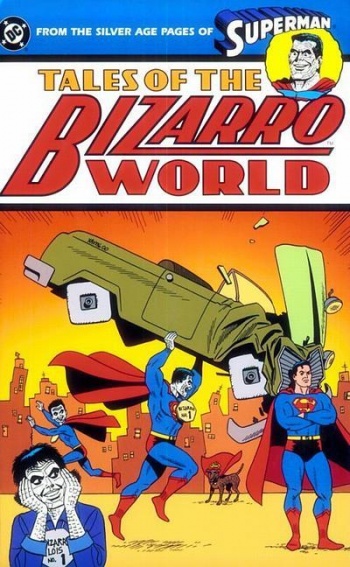 Justin Raimondo offers the case for pessimism in Obama's foreign policy: The outlook for the foreign policy of the new administration is not good. I foresee a protracted period of confusion and internal struggle, punctuated by periodic foreign crises in which Team Obama will be all too eager to prove their "toughness." Diverted by trouble on the home front, President Obama is likely to let the tremendous opportunities opened up by his international popularity and stature go to waste. Putting Hillary Clinton to work on forging a Middle East peace agreement is another example of Bizarro World logic in action: Obama might as well assign the task to Norman Podhoretz. Labels: Hawks, Hillary, Obama
Obama's Clinton (and Bush) Hawkish Retreads
 Obama's campaign for "change" included a promise not to hire "retreads." As Philip Giraldi points out in this interview with Scott Horton, he is already betraying this promise with a vengeance. His announced, and likely, appointments are not only retreads but pro-war ones at that. As of now, the peace wing of the Democratic Party, which was crucial to electing Obama, is being left out in the cold. Labels: Hawks, Obama
Krugman's Prescription for Disaster
Paul Krugman calls for Obama and his advisors to push an expanded version of the New Deal (see the link below by Mark R. Hatlie). According to Krugman, they should boldly throw caution to the winds and “figure out how much help they think the economy needs, than add 50 percent. It’s much better in a depressed economy, to err on the side of too much stimulus.” Obama should reject this advice. If he listens to Krugman, the likely result will be a wave of stagflation that makes the experience of the 1970s look mild by comparison. Such a prescription would both continue and accelerate Bush’s fiscally reckless policy of propping up malinvestments through massive increases in spending, deficits, and easy credit by the Federal Reserve. As the continuing fall of the stock market and the rise of unemployment indicate, more bailouts and more “shock socialism” do not work. Obama made a fatal mistake in failing to oppose the aptly described billionaire bailout. This call for a hyper New Deal rests on a flawed view of history. According Krugman, the only reason Roosevelt failed to bring recovery was because he spent too little, not too much. At the same time, he tries to have it both ways by stating that the crisis of the 1930s would have been “much worse” without the New Deal. A key problem with Krugman’s analysis is that it does not adequately explain why the decade-long New Deal era depression lasted so much longer than previous depressions. Prior to the 1930s, depressions (as in the sharp and short downturn of 1921 and 1922) had typically lasted for two to three years. The predominant anti-depression policy before Hoover and Roosevelt was to cut spending, balance budgets, and let prices, profits, and wages readjust to more sustainable levels. Yet Krugman regards this older approach for curing depressions as “much worse” than the New Deal. The logical implication of his argument is that the New Deal, modest as it was, would have made the Great Depression at least somewhat shorter than previous downturns. The fact that it did not stands as a stunning indictment of FDR’s policies. The unprecedented duration of the depression also represents an indictment of Herbert Hoover’s approach. This was because Hoover intervened too much not, as Krugman would have it, too little. Krugman’s article neglects the relevant point that Hoover had pursued a mini-New Deal from 1929 to 1933 via programs such as the Reconstruction Finance Corporation and the Federal Farm Board. It was Hoover, not Roosevelt, who was the first president to reject the advice of the “leave it alone liquidationists.” Instead of letting malinvestments (or toxic assets in today’s parlance) readjust at a lower level, he desperately propped them up. In great part because of Hoover’s high wage policies, real wages were actually 12 percent higher in 1932 than in 1929! Meanwhile, of course, unemployment advanced to record levels as businesses saved on payroll costs by laying off workers. Perhaps if Hoover had listened to the advice of the so-called “liquidationists,” the depression would have been over by 1931. More troubling, at least for opponents of war, is Krugman’s dubious contention that “What saved the economy, and the New Deal, was the enormous public works project known as World War II, which finally provided a fiscal stimulus adequate to the economy’s needs.” The evidence does not support the view that that war was beneficial for the economy. In a seminal article for the Journal of Economic History, Robert Higgs convincingly challenged the Keynesian theory of World War II as put forward by Krugman and others. While unemployment disappeared during the war, it was hardly a step forward. Moving men and women from the unemployment lines to the killing fields of Anzio did not represent economic progress in any meaningful sense. During the war, Americans at home suffered from rationing, shortages, more accidents on the job, longer hours, and many other measures of economic deprivation. Moreover, as Higgs points out, “real personal consumption declined. So did real private investment. From 1941 to 1943 real gross private domestic investment plunged by 64 percent; during the four years of the war it never rose above 55 percent of its 1941 level; only in 1946 did it reach a new high.” According to Higgs, genuine prosperity did not begin to return until the last months of 1945 and 1946. This prosperity occurred under a policy of reverse Keynesianism which included massive reductions in spending because of demoblization, rapid steps toward price decontrol, and scaled back deficit spending. Higgs sums it up: World War II, the so-called Good War, has been a fount of historical fallacies. One of the greatest—and one of the most pernicious for subsequent policymakers—is the notion that prosperity prevailed during the war. Although Americans might have been dying in the Pacific and European theaters of war, people on the home front actually benefited from the war, because it propelled the economy at long last out of the Great Depression. This view of the war would be sufficiently egregious if it were true, but despite the claims of historians for the past half century, it is not true.Obama's best hope to bring lasting recovery is to let the economy go through a short, but sharp, readjustment. He needs to remove the malivestments not, contra Krugman, perpetuate them. Obama can faciliate this readjustment to a more sustainable level by cancelling the bailout, cutting spending, and pruning deficits. Another worthy goal would be to dismantle the Federal Reserve which helped to create this mess through its easy credit policies. Most of all, however, Obama should end our costly empire by closing down our overseas bases and bringing home the troops. Only then, can we start to get our financial house in order and move towards genuine economic well being. Labels: Empire, Krugman, Obama
Howard Zinn on the election of Barack Obama...
Historian Howard Zinn weighs in on the historical significance of the Obama election: http://www.informationclearinghouse.info/article21182.htm Labels: Democracy, Obama
Susan Rice and the "Muscular Liberals"
The neocons have finally been driven from power. Thank God! But, amidst the celebrations, the antiwar movement still needs to be vigilant. There is a new threat on the horizon: the "muscular liberals." Ivan Eland has the story :
Obama's top foreign policy advisors include Susan Rice, a member of the "muscular liberal" crowd – you know, the same crew that includes the bombing progressives Madeleine Albright and Richard Holbrooke. In a National Public Radio interview during the campaign, Rice decried President George W. Bush's invasion and nation-building adventure in Iraq, while at the same time advocating U.S. intervention and nation-building in Darfur, Sudan.Labels: Obama, Rice
|